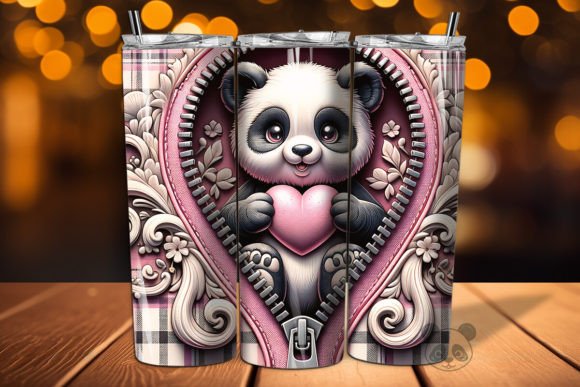
Mastering the Valentine Zipper Panda 3D Tumbler Wrap for Professional Sublimation Workflows
In the competitive landscape of custom merchandise, the difference between a hobbyist project and a scalable product line often lies in the quality of digital assets and the efficiency of the production workflow. For creators specializing in drinkware, integrating a high-fidelity design like the Valentine Zipper Panda 3D Tumbler Wrap represents more than just adding a cute graphic; it is a strategic move to enhance visual depth and perceived value. This specific asset, characterized by its watercolor aesthetic and simulated three-dimensional zipper effect, serves as a critical component in a streamlined sublimation process, allowing entrepreneurs and freelancers to produce premium goods with minimal setup time.
Understanding where this digital file fits into a broader creative and business operation is essential for maximizing return on investment. The Valentine Zipper Panda 3D Tumbler Wrap is not merely an image; it is a pre-engineered solution designed to align with standard industry templates, specifically targeting the popular 15 oz and skinny tumbler formats. By utilizing a ready-made, high-resolution PNG, professionals can bypass the hours typically required to illustrate complex textures and lighting effects from scratch. This shift allows the creator to focus on color management, substrate preparation, and marketing, rather than getting bogged down in the initial design phase.
Integrating Digital Assets into the Production Pipeline
The journey from a digital download to a finished physical product begins long before the heat press is turned on. When you acquire the Valentine Zipper Panda 3D Tumbler Wrap, you are receiving a file optimized at 300 DPI, which is the gold standard for sublimation printing. In a practical workflow, this file acts as the central anchor for your project planning. Before any printing occurs, the asset must be imported into your preferred design software, such as Adobe Photoshop, Illustrator, or specialized sublimation tools like Cosmo or Sure Cuts A Lot.
One of the primary advantages of using a dedicated 3D Tumbler Wrap PNG is compatibility. These files are typically sized to fit standard dimensions—often around 9.3 inches by 8.2 inches for the full wrap area—ensuring that when placed onto a 15 Oz Tumbler Template, the alignment is precise. This precision is vital for maintaining the integrity of the "zipper" illusion. If the design is stretched or compressed incorrectly during the templating phase, the 3D effect breaks, and the watercolor details may lose their clarity. Therefore, the first step in your execution plan should always be verifying the canvas size and resolution settings to match the source file exactly.
Furthermore, this asset interacts seamlessly with other elements of your design stack. While the Valentine Zipper Panda background provides a robust foundation, many professionals choose to layer additional personalization on top. This might include monograms, custom names, or business logos. Because the base file is a transparent PNG, it allows for non-destructive editing. You can place the panda design over a solid color background or a complementary pattern without worrying about white boxes or jagged edges, provided your software handles alpha channels correctly. This flexibility supports a modular approach to design, where one core asset can be adapted into dozens of unique variations for different clients or market segments.
Optimizing Quality Control and Print Preparation
Once the design is finalized within your template, the focus shifts to print preparation. The Valentine Zipper Panda watercolor style relies heavily on subtle gradient shifts and soft edges to achieve its artistic look. To preserve these nuances during the sublimation process, printer calibration is non-negotiable. Professionals should ensure their ICC profiles are up to date and matched to the specific sublimation paper and ink batch being used. A poorly calibrated printer can muddy the delicate watercolor tones, turning a vibrant panda into a dull, washed-out image.
Mirroring the image is another critical checkpoint that often gets overlooked in rushed workflows. Since sublimation transfers the image in reverse, failing to mirror the Valentine Zipper Panda Tumbler Wrap before printing will result in a backward design. This is especially noticeable with text elements if you have added any, but even the directional flow of the zipper teeth can look "off" to a trained eye if reversed. Implementing a checklist system that includes a "mirror check" before hitting print can save significant material costs and time.
After printing, the handling of the transfer paper requires care. The 3D background effect in the design depends on sharp lines to simulate depth. If the printed sheet smudges or absorbs moisture from the air before pressing, those crisp lines will blur. Storing printed sheets in a dry, flat environment until they are ready for the heat press is a simple yet effective quality control measure. Additionally, trimming the design to fit the specific curvature of the tumbler—whether it is a straight wall or a curved skinny tumbler—must be done with precision to avoid visible seams or overlapping graphics that disrupt the visual continuity of the panda and its zipper motif.
Execution: Heat Press Settings and Application
The transition from paper to product is where the theoretical design becomes a tangible asset. Applying the Valentine Zipper Panda wrap requires consistent heat, pressure, and timing. While specific settings vary by machine and tumbler coating, a typical workflow for a 15 oz tumbler involves temperatures around 360°F to 400°F for approximately 5 to 6 minutes. The key here is consistency. Because the design features a seamless pattern potential, any variation in pressure across the platen can cause parts of the zipper to appear lighter or darker than others, breaking the 3D illusion.
Using a convection oven or a dedicated tumbler press with even heat distribution is recommended for these intricate designs. When wrapping the sublimation paper around the tumbler, tension is crucial. The paper must be drum-tight against the surface. If there are air pockets or loose areas, the Valentine Zipper Panda png details will transfer unevenly, resulting in ghosting or blurring. High-temperature heat tape should be used sparingly but effectively to secure the seam, ensuring it does not leave marks on the visible design area. For the Valentine Zipper Panda skinny Tumbler variation, extra attention must be paid to the taper of the cup, as the paper needs to conform to a changing diameter without wrinkling.
Post-press cooling is the final stage of the physical transformation. Removing the tumbler from the press and immediately peeling the paper (hot peel) versus waiting for it to cool (cold peel) depends on your specific paper manufacturer's instructions. However, for watercolor-style designs, allowing the item to cool slightly often helps set the ink more firmly, preserving the vibrancy of the colors. Once the paper is removed, the result should be a glossy, durable finish where the panda appears to be emerging from a zippered pocket, adding a tactile visual interest that flat designs lack.
Scalability and Business Applications
Beyond the technical execution, the Valentine Zipper Panda 3D Tumbler Wrap offers significant advantages for business scalability. For small business owners and Etsy sellers, time is the most valuable currency. By leveraging an Instant Digital Download, you eliminate the bottleneck of custom illustration. This allows you to rapidly deploy seasonal collections. Valentine's Day is a high-volume period, and having a library of themed assets ready to go means you can accept orders later in the season while still meeting shipping deadlines.
This asset also supports diverse revenue streams. It is not limited to tumblers. The high-resolution nature of the file means it can be repurposed for other sublimation blanks such as ornaments, mousepads, or tote bags, provided the aspect ratio is adjusted appropriately. This versatility maximizes the utility of a single purchase. Furthermore, the professional quality of the 3D Tumbler sublimation design allows for higher price points. Customers perceive 3D and textured visuals as premium, distinguishing your products from competitors using generic, flat clip art.
Organization plays a pivotal role in managing these digital assets long-term. Once downloaded, the ZIP file containing the PNG should be stored in a structured directory system, perhaps categorized by holiday, theme, and product type. Backing up these files to cloud storage ensures that your inventory is never lost due to hardware failure. Maintaining a clean digital library enables quick retrieval when a client requests a reorder or when you decide to run a flash sale on Valentine's themed gear.
In conclusion, the Valentine Zipper Panda 3D Tumbler Wrap is a powerful tool in the modern creator's arsenal. It bridges the gap between artistic vision and manufacturing efficiency. By understanding its technical requirements, integrating it smoothly into a calibrated printing workflow, and leveraging its versatility for various products, professionals can deliver high-quality, visually striking merchandise. The success of such a project relies not just on the cuteness of the panda, but on the disciplined application of sublimation best practices, ensuring that every cup leaving your shop meets the highest standards of quality and durability.